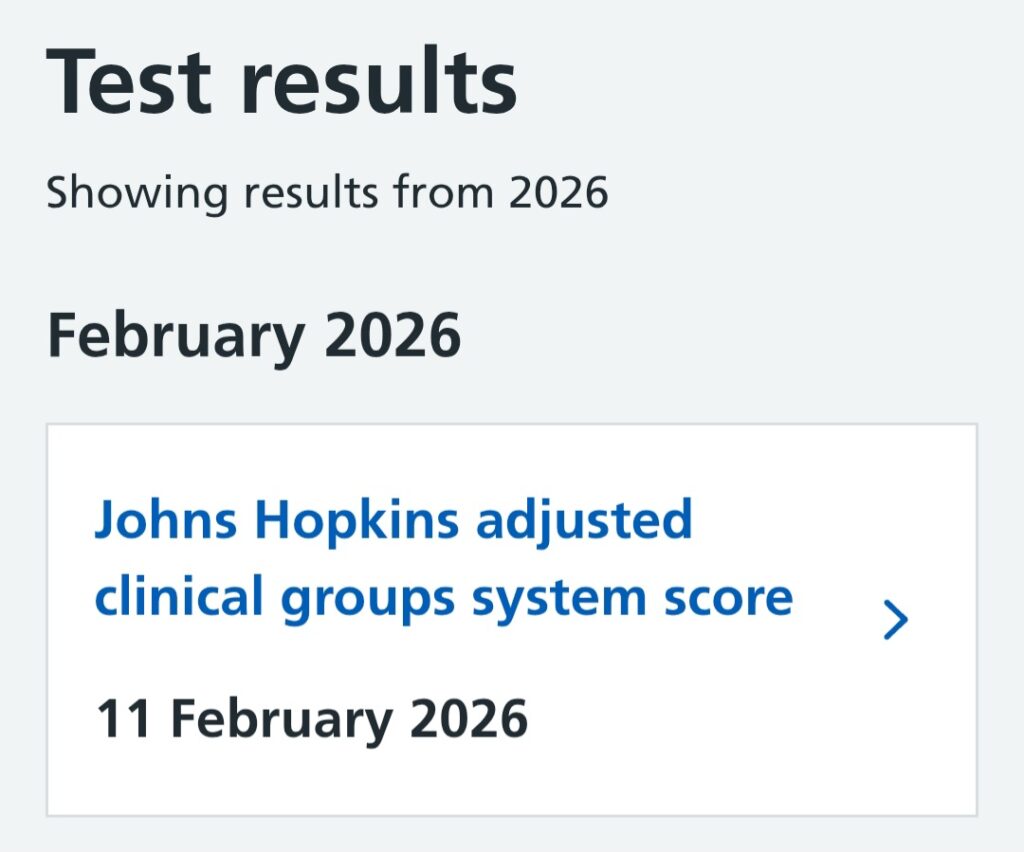
In the coming months you will see a new section appear on the test results page of your NHS App titled “John Hopkins adjusted clinical groups system score”. This is a new, simple tool which allows us to group patients based on their health needs.
Groups are determined based on shared characteristics, needs, or behaviours. This allows us to tailor care delivery and policies to better meet the specific needs of each group.
What are the John Hopkins Patient Needs Groups (PNG)?
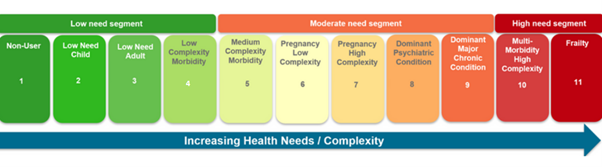
Patient Need Groups categorise patients into different groups based on the complexity and intensity of their healthcare needs rather than just their medical conditions. Instead of focusing solely on a diagnosis (like diabetes or heart disease) it takes in to account a broader range of health characteristics about a patient.
In Berkshire, Oxfordshire and Buckinghamshire we use a well-tested set of 11 segments/groups based on research by John Hopkins University. These are in the image above. These groups consider factors like the number of chronic conditions, the severity of illness and the level of support a patient might need. The patients in a particular group have similar patterns of need.
As patient needs change over time, their categorisation changes with them.
The categories break down into:
- Low need (PNG 1-4) – people without significant health issues who need less intervention. Preventative care may stop them becoming unwell.
- Moderate need (PNG 5-9) – people who have a condition that is well managed. They may need occasional support to remain stable.
- High need (PNG 10-11) – people who have several conditions. They may need regular monitoring or a more coordinated approach.
What are the Benefits?
- Personalised Care: Healthcare providers can use PNGs to tailor their care plans. This means patients receive the specific type of care they need, whether it’s more frequent monitoring, specialised treatment, or preventive care.
- Improved Coordination: PNGs help healthcare teams coordinate more effectively. If a patient has complex needs, the care team can work together to ensure all aspects of their health are addressed, from medication management to lifestyle support.
- Better Resource Allocation: Hospitals and GP Surgeries can allocate resources more efficiently based on the needs of different patient groups. This ensures that patients with the most urgent needs receive timely care, while those with less critical conditions are managed appropriately.
- Proactive Health Management: For patients in lower-need groups, PNGs encourage preventive care and early intervention. This can help them maintain their health status and avoid complications in the future.
- Enhanced Communication: PNGs facilitate better communication between patients and healthcare providers. By understanding which group a patient falls into, together they can have clearer discussions about what to expect from the care they receive and what actions they can take to manage their health.
What Does this Mean for Patients?
The result will appear like this in your app:
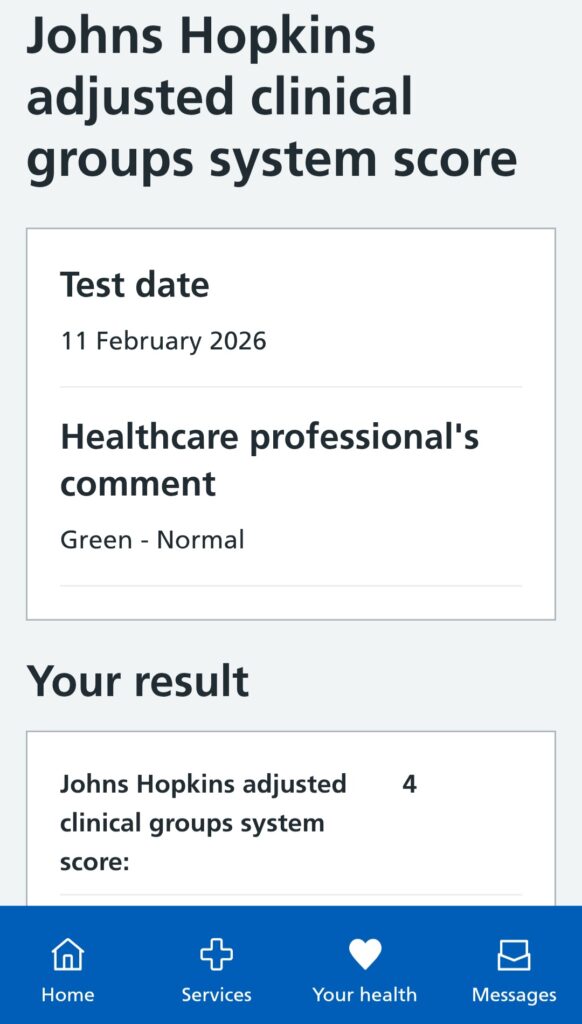
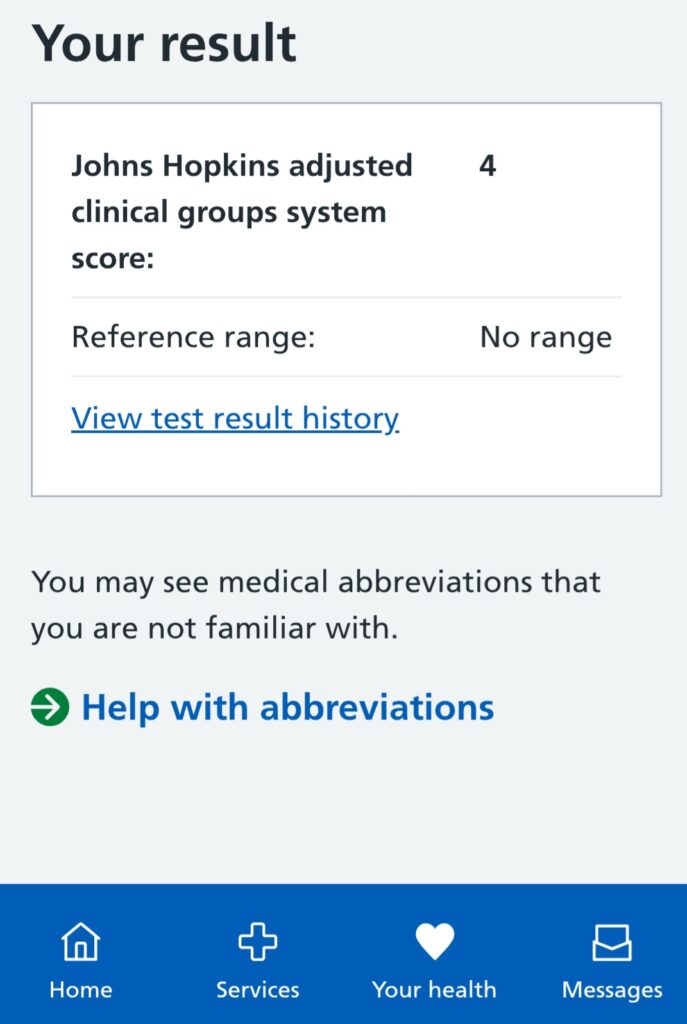
Don’t worry, no action is needed from you. The score is purely an administrative tool for the practice. There is no cause for concern regarding this score.